UPF — Ultraviolet Protection Factor — is the ratio of UV radiation that reaches the skin through the fabric compared with bare skin. UPF 50 means roughly one fiftieth of the UV passes through, or about 2%. The scale is not linear in practice: UPF 15 blocks around 93%, UPF 30 around 97%, UPF 50 around 98%.
Those last few percent are why the category converged on 50+. Beyond that, the difference in protection is smaller than the difference in how the fabric behaves when it is wet, stretched or worn thin.
Two standards do most of the work: AATCC 183 in the US and AS/NZS 4399 in Australia and New Zealand. Both pass UV through a fabric sample and measure transmission across the UVA and UVB spectrum. Neither is a test of a finished garment on a body.
That gap is where claims get loose. A fabric can test at UPF 50 flat, dry and unstretched, and drop when it is wet, stretched over a shoulder, or worn to the point where the knit opens up.
Dark dyes absorb more visible light, which is why black feels hotter and is sometimes assumed to protect better. For UV, the bigger variables are yarn, density and weave: a tight, dense knit blocks more than a loose one regardless of shade. Additives in the yarn — typically titanium dioxide or ceramic particles — raise protection without changing the hand feel.
This is also why a very light, very thin "cooling" fabric is the hardest case. Lightweight and high protection pull in opposite directions, and the honest answer is that one of them has to give.
Not "is it UPF 50?" — the answer will be yes. Ask instead:
A supplier who can answer those three questions has actually seen the report. A supplier who answers "yes, 50+" has seen the hangtag.
Our sun fabrics are produced to UPF 50+ requirements and the underlying documents travel with the quote or the sample if your onboarding needs them. We do not publish certificate numbers on this site, and we do not claim 100% UV blocking — nothing woven is.
The practical rule for buyers: specify the protection level on the tech pack, specify the test state, and keep the report with the order. That is what survives a marketplace compliance check two seasons later.
How the print is applied to those fabrics is on the sublimation page; what the floor can run in a month is on the factory page.
UPF 50+ is the top band on most labelling schemes. The plus indicates a result above 50; the exact figure is in the test report, not on the tag.
Slightly, in visible light terms. For UV, yarn density and construction matter far more than shade.
One new entry every week. RSS if you would rather not check back.
Screen printing has a setup cost that has to be paid before the first shirt. Dye sublimation does not — which is the whole reason a 12-piece order is possible. Here is where the money actually goes at low volume.
Read the note →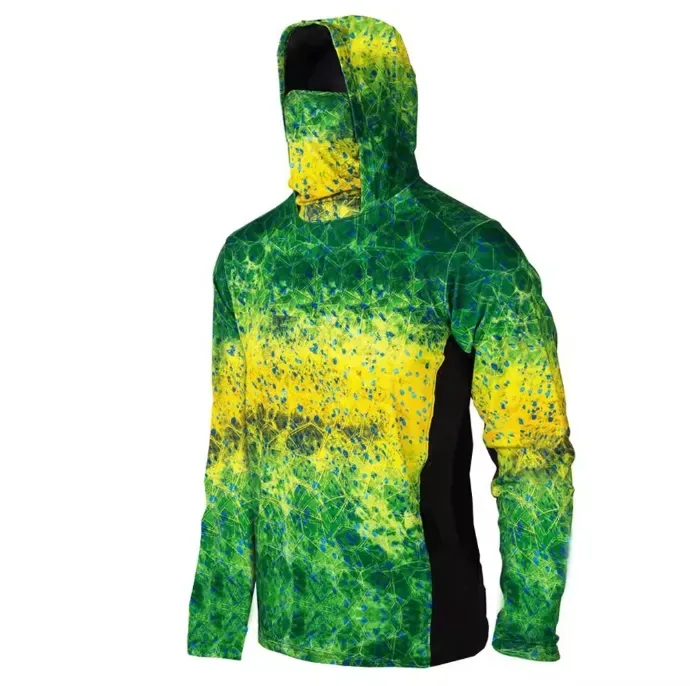
A hooded sun shirt is not a long sleeve shirt with a hood on it. These seven construction points are what separate a shirt that gets worn for eight hours from one that stays in the locker.
Read the note →Fabric, print coverage, sizes and destination is enough to start.